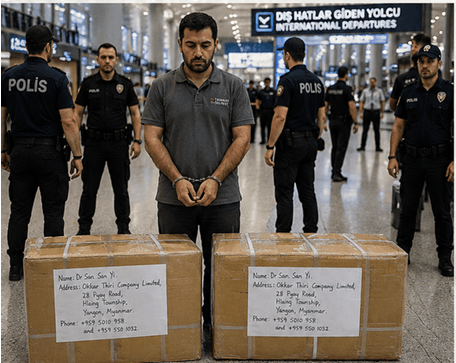
Technology is reshaping the way customs authorities monitor and secure global trade. New tools — from cargo scanners to data analytics to artificial intelligence — are providing unprecedented insight into what crosses borders. But these technologies also come with limitations.
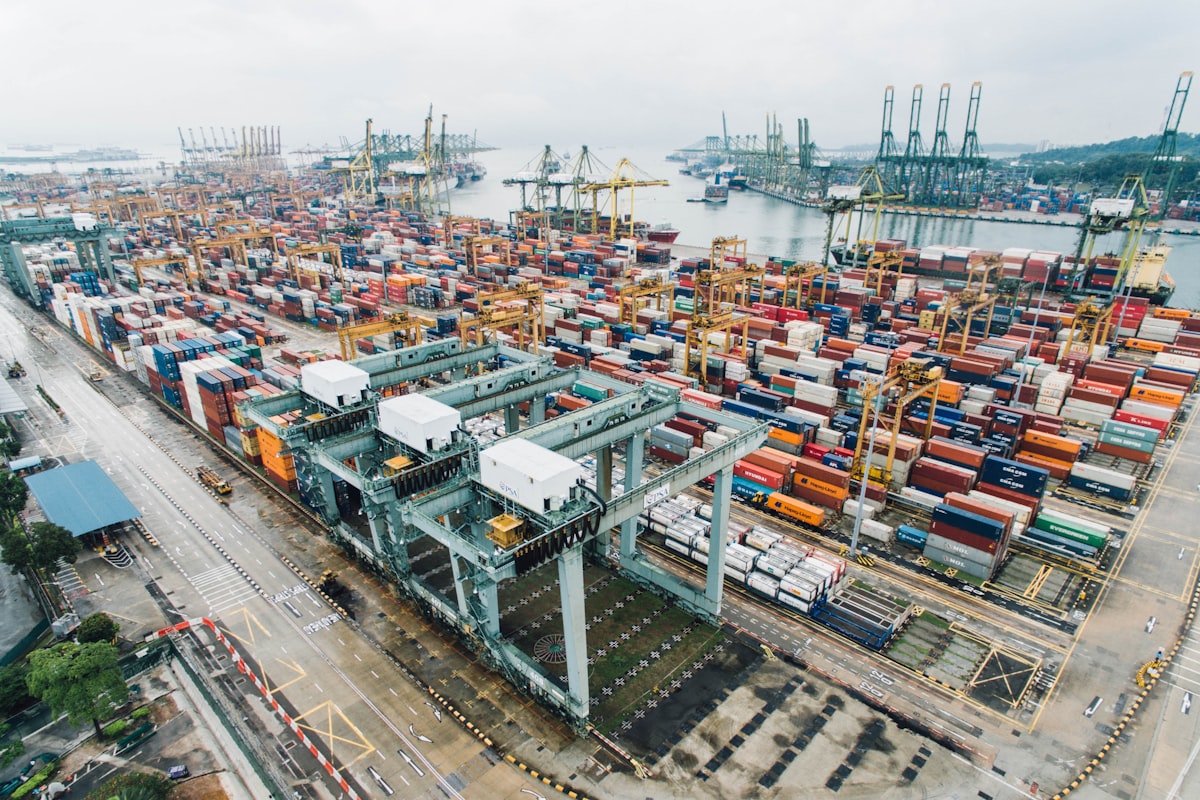
Cargo Scanning Technology
Non-Intrusive Inspection
X-ray and gamma-ray scanning systems allow customs officials to see the contents of sealed containers without opening them. These systems can:
- Detect hidden compartments
- Identify anomalies in packing
- Determine the approximate density and composition of cargo
- Compare actual contents to declared contents
Advanced scanning systems can scan a 40-foot container in minutes, processing thousands of containers daily. They are used at ports, border crossings, and airports.
Limitations of Current Scanning Technology
Despite their capabilities, current scanning systems have limitations:
- Resolution — High-density materials (like lead) can obscure contents
- Interpretation — Identifying specific items is difficult
- False positives — Many scans raise questions that are resolved after physical inspection
- Throughput — Scanning thousands of containers requires significant infrastructure
Data Analytics and Risk Assessment
Automated Risk Scoring
Modern customs systems use sophisticated algorithms to assess the risk of each shipment. Factors include:
- Shipper and recipient histories
- Origin and destination
- Declared value and commodity
- Route and transit times
- Documentation patterns
The system flags anomalies — shipments that differ from expected patterns — for further review.
Predictive Analytics
Some systems use machine learning to identify emerging risk patterns. By analyzing historical data, these systems can predict which shipments are most likely to contain contraband or have incorrect declarations.
Limitations of Data-Driven Approaches
Risk assessment is only as good as the data it uses. Challenges include:
- Data quality — Incomplete or inaccurate data leads to poor risk assessment
- Incomplete profiles — New shippers lack the history required for accurate risk scoring
- Adapting criminals — As systems learn patterns, criminals adapt their methods
- Bias — Systems may reflect historical biases in enforcement
Artificial Intelligence
AI is being applied to customs operations in several areas:
- Image recognition — AI systems can analyze scan images more quickly than human operators
- Natural language processing — AI can analyze declaration documents for inconsistencies
- Pattern recognition — AI can identify unusual patterns that might indicate smuggling
The AI Credibility Problem
However, AI systems face credibility challenges:
- Black box problem — It's often unclear why an AI made a particular recommendation
- False positives — AI may flag many innocent shipments for review
- Bias — AI systems can reproduce and amplify biases in training data
- Adaptability — AI systems need regular updating to remain effective
The Human Element
Despite technological advances, human judgment remains essential in customs enforcement. Customs officers:
- Interpret findings — Technology provides data, but humans must interpret it
- Apply discretion — Not every flagged shipment warrants the same response
- Recognize context — Human officers understand local conditions and cultural context
- Interview and investigate — Many investigations require human interaction
What's Next?
The future of customs technology likely includes:
- Integration of data systems — Real-time data sharing between countries
- Advanced AI — More sophisticated pattern recognition and anomaly detection
- IoT and blockchain — Better visibility into supply chains
- Increased automation — More processes automated while maintaining human oversight
The Balance
Technology is a powerful tool for customs enforcement, but it is not a silver bullet. The most effective customs systems combine advanced technology with well-trained human operators, clear legal frameworks, and international cooperation.
This article explores the technological dimensions of customs enforcement. It does not provide operational details about specific customs systems or procedures.